
Small business owners searching for examples of customised software usually don't want another listicle naming "CRM" and "ERP." They want to know what a real, narrow, useful internal app looks like for a company their size. This post walks through nine kinds of custom software we've built at Nando, a studio in Tyler, Texas. Each entry has the specific problem it solved and a rough build cost, drawn from real East Texas projects across HVAC, plumbing, clinics, distribution, timber, and oilfield services (composites, no named clients, but honest numbers).
How to tell which example applies to you
Before the gallery, a quick filter. The examples of customised software below fall into one of four job shapes:
- Glue apps stitch two or three tools you already pay for into one screen.
- Workflow apps replace a process that currently lives in a spreadsheet or somebody's head.
- Customer-facing apps (portals, booking, status pages) reduce phone calls.
- Automation layers use AI to handle the repetitive reading, writing, and routing that eats hours a day.
If three of the nine below feel like your business, you probably have a real project. If none do, off-the-shelf tools are almost certainly your answer, and we'd tell you that on a first call.
1. Dispatch board for a multi-truck HVAC or plumbing shop
Problem: A four-truck HVAC outfit in Longview was running dispatch on a whiteboard and a group text. Techs didn't know which job was next until the office called. Reschedules got lost. The owner's wife was doing three hours of manual route-planning every morning.
What we built: A web-based dispatch board showing today, tomorrow, and the backlog. Drag-and-drop assignment. Each tech sees only their queue on a phone, with customer address, gate codes, and prior service notes. It syncs to QuickBooks for billing and pulls customer history automatically.
Build range: $18k to $32k for phase one, 6 to 9 weeks. Bought back roughly ten hours a week of office time.
2. Quoting tool for a custom fabricator or installer
Problem: A metal fabricator's quotes took two days and lived in the estimator's head. When he was on vacation, quoting stopped. Pricing drifted between jobs because there was no shared logic.
What we built: A quoting app where sales reps plug in dimensions, materials, finishes, and install scope. The app applies the shop's real markup rules, spits out a branded PDF, and logs the quote so win/loss rates are finally visible. A junior estimator can now do in 20 minutes what took the senior guy two hours.
Build range: $15k to $28k.
3. Clinic intake and scheduling portal
Problem: A specialty clinic in Tyler was fielding 60-plus calls a day to schedule, reschedule, and collect intake forms. The front desk was drowning. The EHR's built-in portal was clunky enough that patients refused to use it.
What we built: A branded patient portal for booking, rescheduling, and completing intake forms on a phone before the visit. It hands the finished intake to the EHR through an integration. HIPAA-compliant hosting, audit logs, the works. We leaned on the HHS guidance on HIPAA during design and worked with a compliance reviewer before launch.
Build range: $35k to $70k because of the compliance overhead. Reduced inbound scheduling calls by about 40% in the first 90 days.
4. Inventory and parts-tracking app for a distributor or supply house
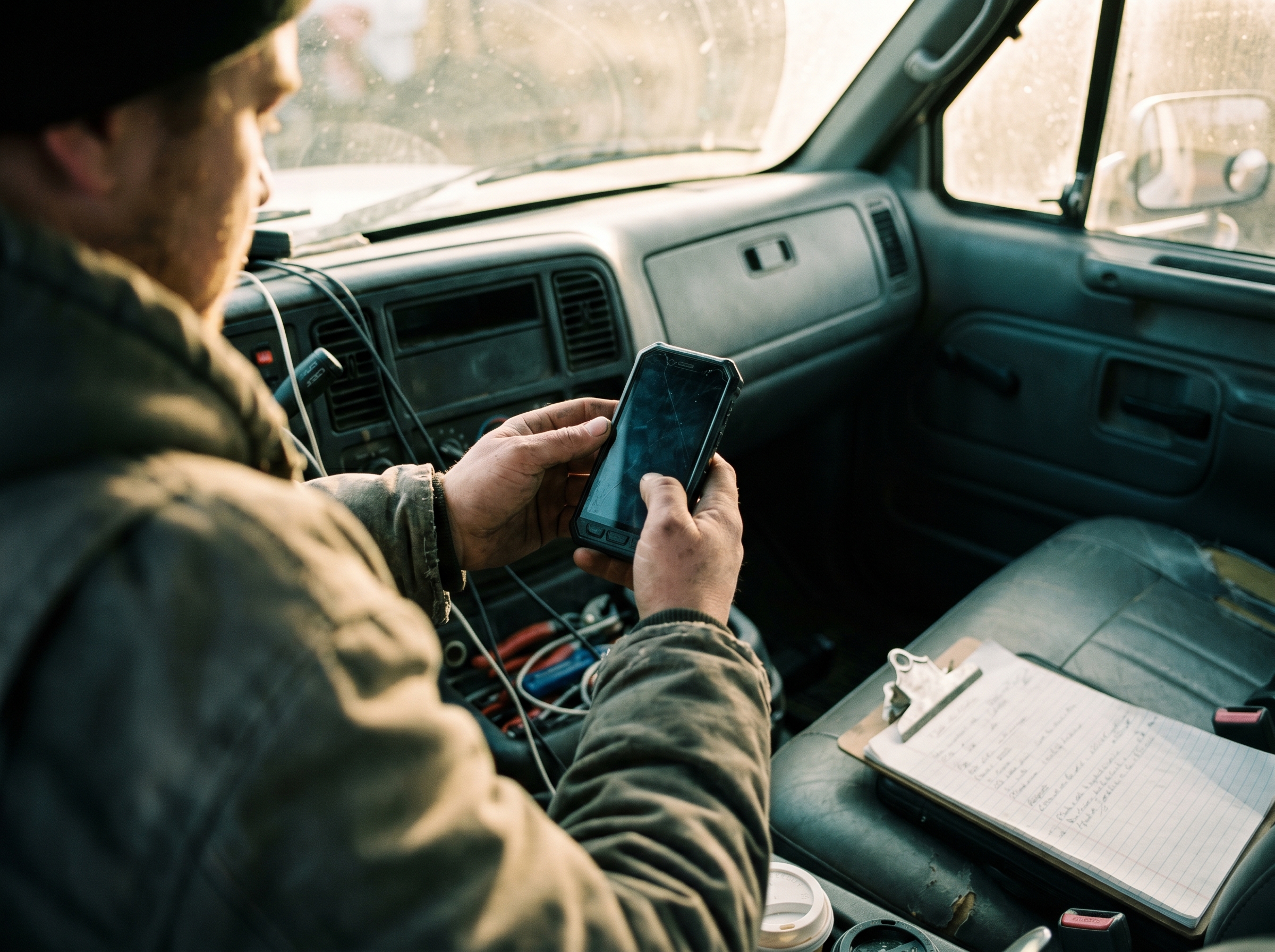
Problem: A plumbing supply counter knew what was on the shelf this morning but not what was on the shelf right now. Counter sales, will-calls, and contractor deliveries all pulled from the same stock with no live view. Stockouts were daily.
What we built: A lightweight inventory app running on a tablet at the counter and on phones for the yard crew. Barcode scans for receiving and pulls. Live stock counts visible to the outside sales rep in the truck. Low-stock alerts that actually get to the buyer. We wrote about this pattern in more depth in our custom inventory software case study.
Build range: $20k to $45k depending on how many locations and whether it has to talk to an accounting system.
5. Field-tech mobile app that works without signal
Problem: Techs in rural East Texas counties were losing job data because their service app needed a live connection. One guy was writing tickets on paper and entering them at night from the shop.
What we built: A mobile app that works fully offline. It pulls the day's jobs in the morning and captures photos, signatures, parts used, and time on site. Data syncs when the truck hits wifi. Built as a progressive web app, so there's nothing to install from the app store.
Build range: $22k to $40k. Often pays for itself inside a year just by eliminating the double-entry at night.
6. Customer portal for approvals, documents, and job status
Problem: A general contractor was emailing PDFs of change orders and calling customers for signatures. Half the time the signed copy never came back. Projects stalled waiting on approvals.
What we built: A customer portal where the homeowner or facility manager logs in to see current drawings and change orders. They approve with an e-signature, upload their own documents, and track milestones. Project managers stopped chasing paperwork and started closing change orders in 24 to 48 hours instead of a week.
Build range: $25k to $55k.
7. AI intake and triage for the phone, email, and web form
Problem: An HVAC company's after-hours calls and web-form submissions piled up until morning. By the time the office opened, hot leads had called a competitor.
What we built: An automation layer that reads incoming calls (transcribed), emails, and form submissions. It classifies each one as a service request, quote, warranty, or spam, drafts a response, and texts the on-call tech directly for emergencies. The owner reviews a morning digest instead of an inbox. McKinsey's operations research has tracked this pattern across industries, and the tooling is finally cheap enough for a 15-person company to use.
Build range: $12k to $30k. The lowest-friction first AI project for most service businesses.
8. Timber, oilfield, or logistics load-tracking board
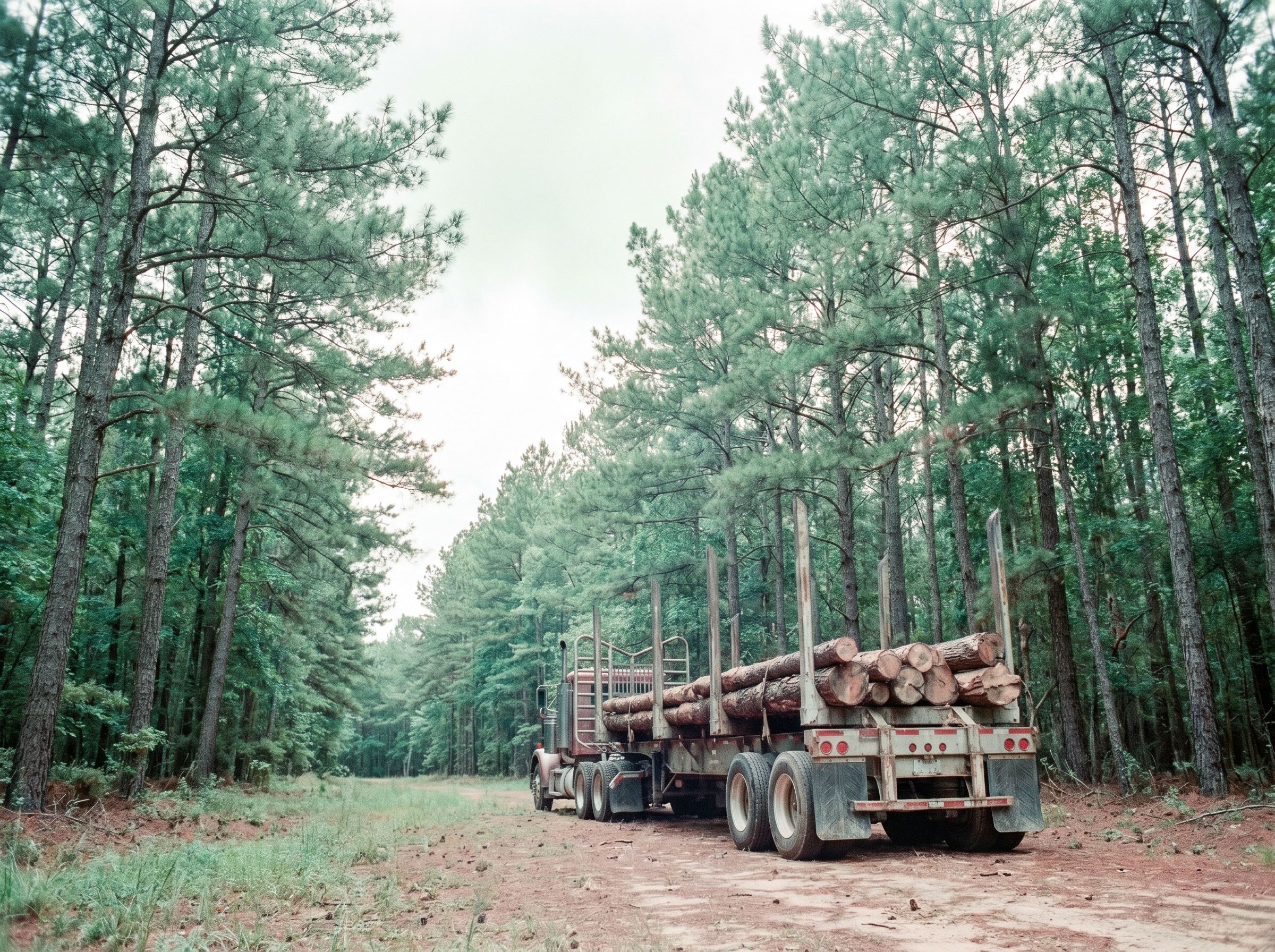
Problem: A log hauler was tracking loads on paper tickets handed in after each shift. Settlement with mills took a week. Disputes happened constantly because nobody had a photo of the load count.
What we built: A simple load-tracking app for drivers. Scan the ticket, snap two photos, capture GPS, submit. Dispatch sees loads in real time. Settlement reports generate automatically every Friday. Works on the $200 Android phone the driver already has.
Build range: $18k to $35k. This pattern translates cleanly to oilfield services, aggregate hauling, and any operation where a ticket moves from a truck to an office.
9. Internal dashboard that unifies QuickBooks, a CRM, and a scheduling tool
Problem: A 20-person services company had four SaaS tools and an office manager whose job was mostly to copy numbers between them for the Monday meeting. The owner was making decisions on data that was always three days old.
What we built: A read-only internal dashboard that pulls from QuickBooks Online, their CRM, and their scheduling tool through APIs. It shows the metrics that actually matter: revenue by service line, jobs-per-tech, AR aging, and conversion from quote to booked work. Updates hourly.
Build range: $10k to $25k. Often the first project we recommend because it's cheap, fast, and makes the case for bigger builds later.
What we tell clients not to custom-build
Not everything belongs as custom software. Things we actively talk people out of building:
- Accounting. Use QuickBooks, Xero, or a vertical-specific package.
- Email and calendar. Google Workspace or Microsoft 365.
- Generic CRM. If HubSpot or Pipedrive plus a little configuration covers 80% of your needs, stop there.
- Payroll. Gusto, ADP, or equivalent. The compliance surface area isn't worth owning.
- A full ERP from scratch. If you genuinely need ERP, buy one and customize the edges.
We turn down roughly one in four inquiries for reasons like these, and we've written about that honestly in our post on the real disadvantages of custom software. Worth a read before you commit.
Frequently asked questions
What's the difference between custom software and customised software?
In practice, nothing. Most examples of customised software you'll see online are built from scratch; "customised" often just implies the app was tailored to one business.
What's the smallest realistic custom software project?
Around $8k to $12k for a single-purpose internal tool, like a simple quoting calculator or a one-screen dashboard. Below that, you're usually better off configuring a SaaS tool.
How long does a typical build take?
Phase one is usually 6 to 10 weeks from signed proposal to live software. Bigger systems get broken into phases so you're not waiting six months to see value.
Do we own the code?
Yes. Every project we deliver, the client owns the code, the database, and the cloud accounts. If you ever want to take it to another shop, you can walk out with everything.
Can custom software integrate with QuickBooks, Jobber, or ServiceTitan?
Usually yes. All three have APIs, and we build integrations with them routinely.
What happens if our needs change after launch?
We scope a small monthly retainer (usually $500 to $2,500) for ongoing tweaks and small additions. If your needs change significantly, we scope a phase two.
Is AI automation worth it for a small business?
For specific workflows, yes. Intake triage, quote drafting, transcript-to-CRM notes, and document classification are the highest-value starting points.
How do we know we're not getting oversold?
Ask the shop what they'd turn down. A good custom software partner loses revenue regularly by saying "you don't need us for this."
If any of these examples of customised software sound like your week, book a free 30-minute call with us. We build custom internal software and AI automation for small businesses across Tyler, Longview, Lufkin, and the rest of East Texas. Tell us what's broken through the contact form and we'll tell you honestly whether a custom build is the right move.