
Most small business owners we talk to in East Texas don't wake up wanting "custom software." They wake up tired of the same five problems: a scheduling spreadsheet nobody trusts, a quoting process that lives in one person's head, invoices that get forgotten, inventory counts that are always a little off, and a front desk that keeps asking the same questions by phone. That's the real starting point. Not technology. Friction.
This post is a straight answer to the question we hear most often: what does a custom software development engagement actually look like for a small business, and when is it worth it?
The honest test: when off-the-shelf stops working
If QuickBooks, Jobber, ServiceTitan, Housecall Pro, or a well-configured spreadsheet runs your business, keep using them. We'll tell you that on the first call. Custom software makes sense when one of these is true:
- You're paying for three or four SaaS tools that don't talk to each other, and somebody on your team spends hours a week copying data between them.
- Your business has a workflow that's genuinely unusual. A pipe fabricator who also does field installs. A clinic that bills insurance and runs a retail supplement shop. A logistics outfit with a yard, a dispatch board, and a customer portal all tied together.
- You've hit the ceiling of a tool's configuration and the vendor wants $40k a year plus per-seat fees to unlock what you actually need.
- You're hiring a person whose job is mostly to move information around. That's a software problem wearing a payroll costume.
If none of those apply, a custom build is probably overkill. If two or more apply, the math usually works in favor of building something.
What a real project looks like, start to finish
We'll walk through the shape of a typical Nando engagement. Numbers vary, but the rhythm doesn't.
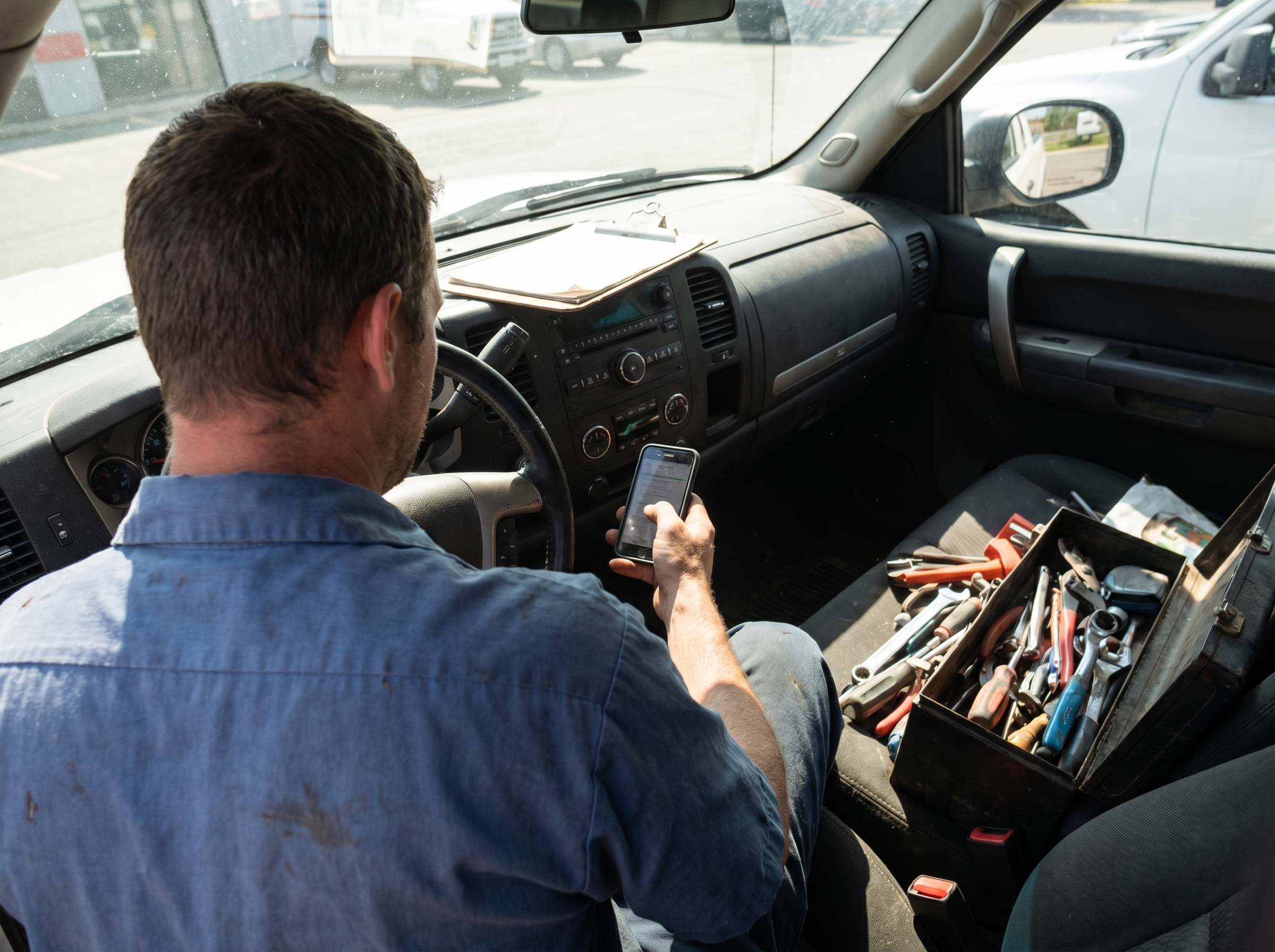
Week 1: We sit with your team. Not with the owner only. With the dispatcher, the office manager, the tech in the truck. We watch the work happen. We ask where the paper jams are. Most of what ends up in the final build comes from the people doing the job, not the person paying for it.
Weeks 2-3: A written plan and a fixed scope for phase one. We don't try to replace everything at once. We pick the one workflow that bleeds the most time or money and build that first. A phase-one build is usually 6 to 10 weeks of work and lands somewhere between $12k and $40k depending on complexity.
Weeks 4-10: Build, with you in the loop weekly. You see progress every Friday. You click real screens. You tell us what's wrong while it's still cheap to change. Nothing is precious. If a feature isn't earning its keep, we cut it.
Launch and the month after. We don't disappear. The month after go-live is where the small fixes, training gaps, and "actually, can we also..." requests live. We budget for it.
Phase two, if it makes sense. Once phase one is saving real hours, we talk about what to tackle next. Sometimes there is no phase two, and that's fine.
What we actually build
To keep this concrete, here's the kind of work we do for small businesses in Tyler, Longview, Lufkin, and the surrounding area:
- Internal dashboards that pull data from QuickBooks, a scheduling tool, and a warehouse system into one screen the office manager actually uses.
- Customer portals where clients upload documents, approve quotes, and see job status without calling in.
- Field apps for technicians that work on a phone in a truck with spotty signal, then sync when they hit wifi.
- AI automation for the slow parts of the day: intake forms that turn into draft work orders, phone transcripts that become CRM notes, inbox triage that routes quotes to the right estimator. McKinsey and others have been tracking how AI is reshaping operations for years now, and the tooling has finally gotten cheap enough that a 12-person company can use it without a data science team.
- Quoting and estimating tools tuned to how your business actually prices work, not how a generic SaaS vendor thinks you should.
None of these are glamorous. All of them earn their keep in hours saved per week, which is the only metric we care about.

What it costs, honestly
We get this question on every first call, so here's a direct answer.
A focused phase-one internal app is typically $12k to $40k. A larger multi-module system with integrations, a customer portal, and AI automation runs $50k to $150k, often spread across phases. Monthly hosting and maintenance for something we've built is usually $150 to $600 depending on traffic and complexity. That's all-in, including cloud infrastructure.
Compare that to what you're already paying. Four SaaS seats at $150/month across a 15-person team is $27k a year, every year, forever, for software that only half-fits. A one-time build that replaces two of those tools and saves your office manager ten hours a week pays for itself inside 18 months and keeps paying after.
The SBA's guide to managing your business is a good reality check on operational spend before you decide. If software tooling is north of 3-5% of revenue and growing, something is off.
What we won't do
A few things we turn down, because being direct about this saves everyone time:
- We won't build something you can buy. If Jobber solves 90% of your problem, use Jobber. We'll help you configure it and move on.
- We won't take on a project without meeting the people who will actually use the software. Owner-only builds fail.
- We won't lock you in. The code we write is yours. The database is yours. If you want to take it to another shop in five years, you can.
- We won't hand you a 40-page requirements document as the deliverable. The deliverable is working software.

How to know if you're ready
You're probably ready for a custom build conversation if:
- You can name the specific workflow that's costing you the most time, in hours per week.
- You have at least one person on staff who will champion the tool internally. Software without an internal owner dies.
- You're willing to spend 2-3 hours a week for 8-10 weeks being part of the process. Not 40 hours. A few hours, consistently.
- You're thinking in terms of 3-5 years, not this quarter. Custom software is an asset, not an expense.
If that sounds like your team, we build custom internal software for small businesses across East Texas and we're happy to have a no-pressure first call. We'll tell you honestly if a build is the right move or if you'd be better off with something off the shelf. Drop a line through the contact form on our site and we'll set something up.
You don't need to know what you want built. You just need to know what's broken.